

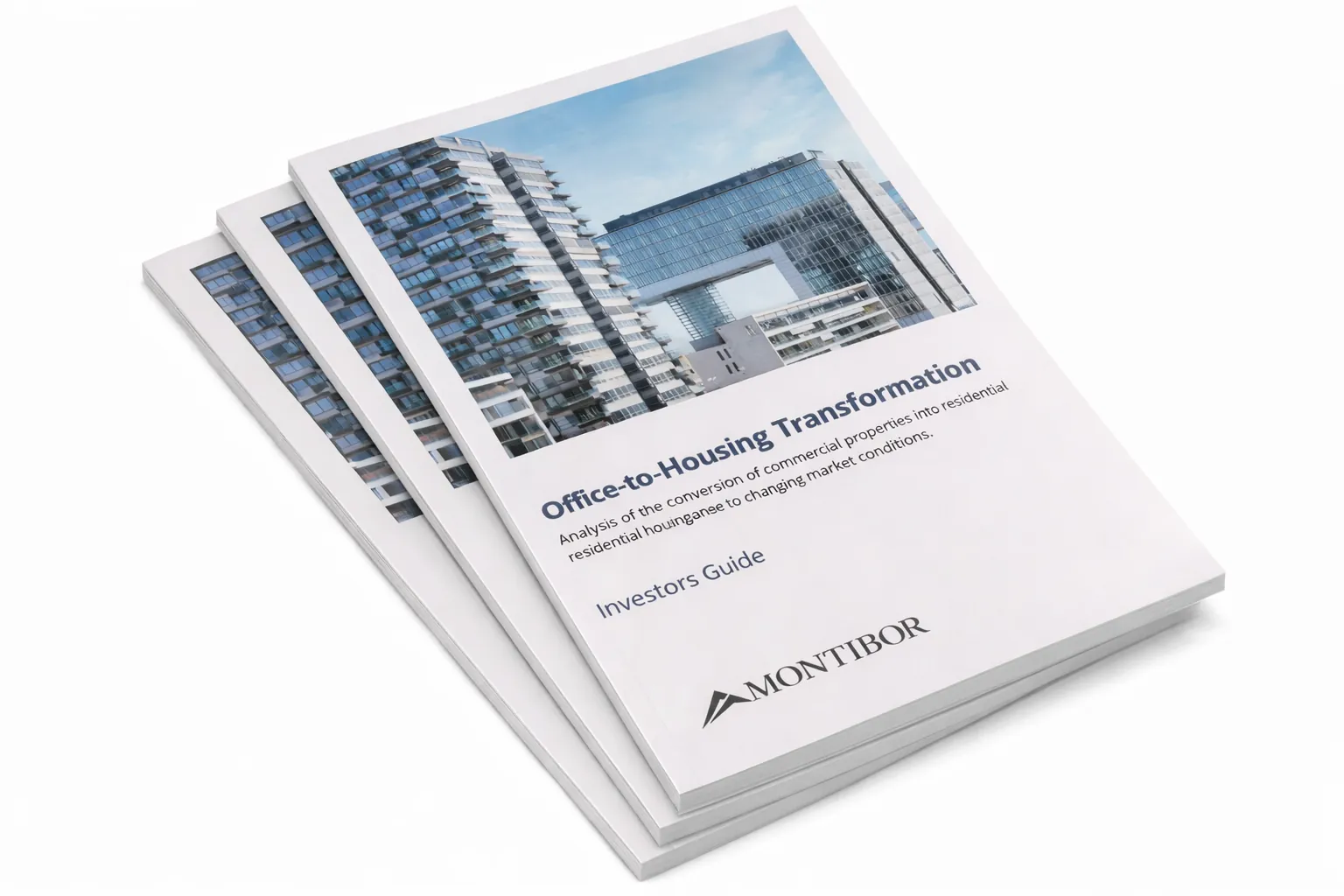
Structural changes in work patterns, combined with persistent housing shortages, are reshaping the risk and opportunity profile of office and commercial real estate. Rising vacancy levels, functional obsolescence, and shifting demand dynamics are increasing the relevance of conversion strategies that reposition existing assets for residential use.
This investor guide outlines the key considerations when evaluating such transformations. Central topics include technical suitability of existing structures, achievable residential yield, regulatory and planning frameworks, cost implications, and economic feasibility. Particular focus is placed on floor plan efficiency, building depth, access, and compliance requirements, which are critical drivers of conversion viability.
From an ESG perspective, adaptive reuse offers potential advantages through reduced embodied carbon, lower land consumption, and shorter realization periods compared to new construction. Energy upgrades and functional optimization can further improve long-term asset performance while contributing to housing supply in constrained markets.
The guide provides a structured framework for understanding risks, value drivers, and decision criteria relevant to investments in office-to-residential conversions, supporting informed capital allocation in a changing real estate environment.
April 2026